Ambient Developer Advocacy: Designing Developer Experiences Beyond Promotion
Most memorable technologies are not only the most powerful or the most efficient ones, but the ones that create meaningful experiences around them.


I was inspired to coin the term Ambient Developer Advocacy by one of the talks at Cake Conf. I attended an interactive session of ambient journaling, that included live ambient music by Vojto Monteur, a truly aesthetic slide deck, and was led by Linda Parys who is also a creativity trainer, brand coach, and journaling facilitator.
What really stood out was the state of flow the participants were able to achieve after a very long and intense day at the conference. The experience was extremely immersive. Linda wore eye-catching yellow and violet elements of her outfit that matched the graphic design of her slides. The journaling prompts were purposefully crafted, so the whole session boosted our wellbeing. It also created a sense of community by sharing our written thoughts with other participants. The calming music enhanced the flow state while journaling.
It felt as if the whole experience was surrounding me and I was part of something peculiar and extraordinary. What really struck me was not just the activity itself, but how the environment, design, and subtle cues guided participation with natural urge to keep going with the flow.
Ambient Marketing
This made me wonder whether the same “ambient” principles exist in other fields. Following that thread, I discovered ambient marketing. It’s a unique approach to crafting memorable and surprising campaigns that often leverage multisensory channels, turning observers into engaged participants. These campaigns are often creatively embedded in busy urban areas or everyday public spaces.
Ambient marketing campaigns often follow a pattern:
Standing out and capturing attention
Creating a positive emotional connection
Engaging the audience
Choosing a creative placement
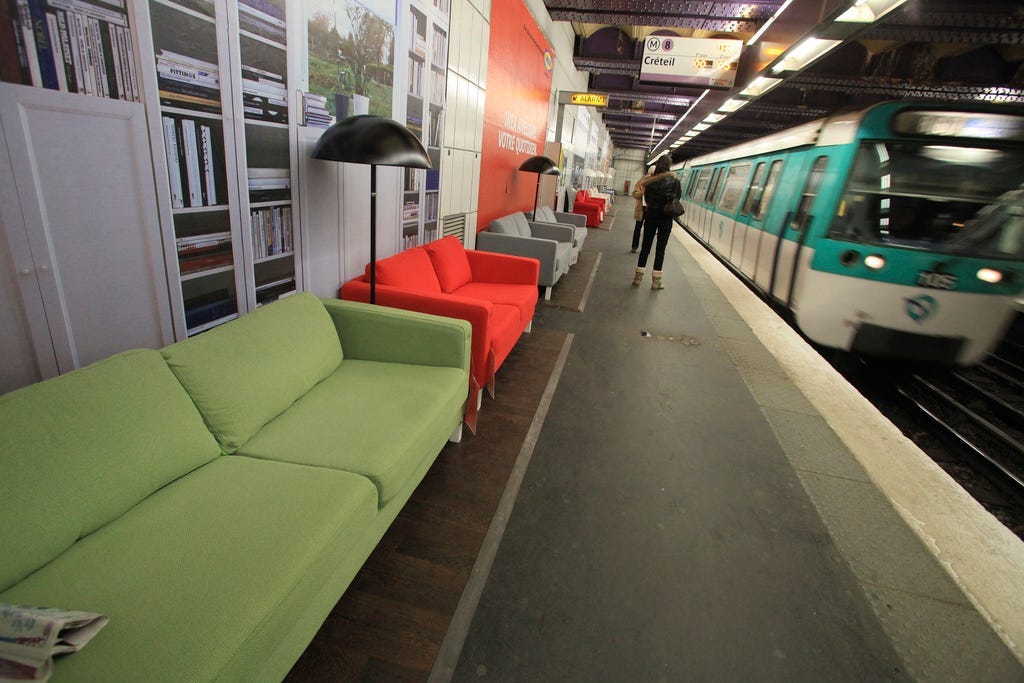
Two famous examples of ambient marketing campaigns include a painted zebra crossing to resemble a pack of French fries by McDonald’s, or public subway stations transformed into cozy spaces with IKEA furniture. These campaigns work similarly to the ambient journaling session I attended, leaving a strong mark in memory and creating a feeling of engagement.
From Ambient Experiences to Developer Relations
Taking the metaphor from IKEA’s campaign, we could say that instead of providing developers with instructions on how to build, you allow them to literally step inside and feel what the technology enables in a memorable and fun way.
In a nutshell, Ambient Developer Advocacy is a way of raising awareness about a technology or product by designing memorable, immersive experiences rather than relying on direct promotion or traditional demos. Such experiences often include elements of:
Participation instead of passive observation
Storytelling instead of listing specifications
Surprise and delight instead of predictability
Emotional connection instead of dry messaging
Multisensory engagement instead of single-channel communication
Environment design instead of isolated touchpoints.
Companies and tech communities have been leveraging this concept intuitively by building unique experiences, either virtually or in-person. Let’s dive into a few patterns that are already visible in the industry.
TwilioQuest is an example of enhancing participation and storytelling. It’s an RPG-style game that teaches developers Twilio’s APIs. Instead of static tutorials, developers explore an interactive world where challenges naturally introduce coding concepts. Many educational coding platforms use similar patterns, turning the learning process into something that feels more like a game than a tutorial. My favourite examples are Flexbox Froggy and Grid Garden.
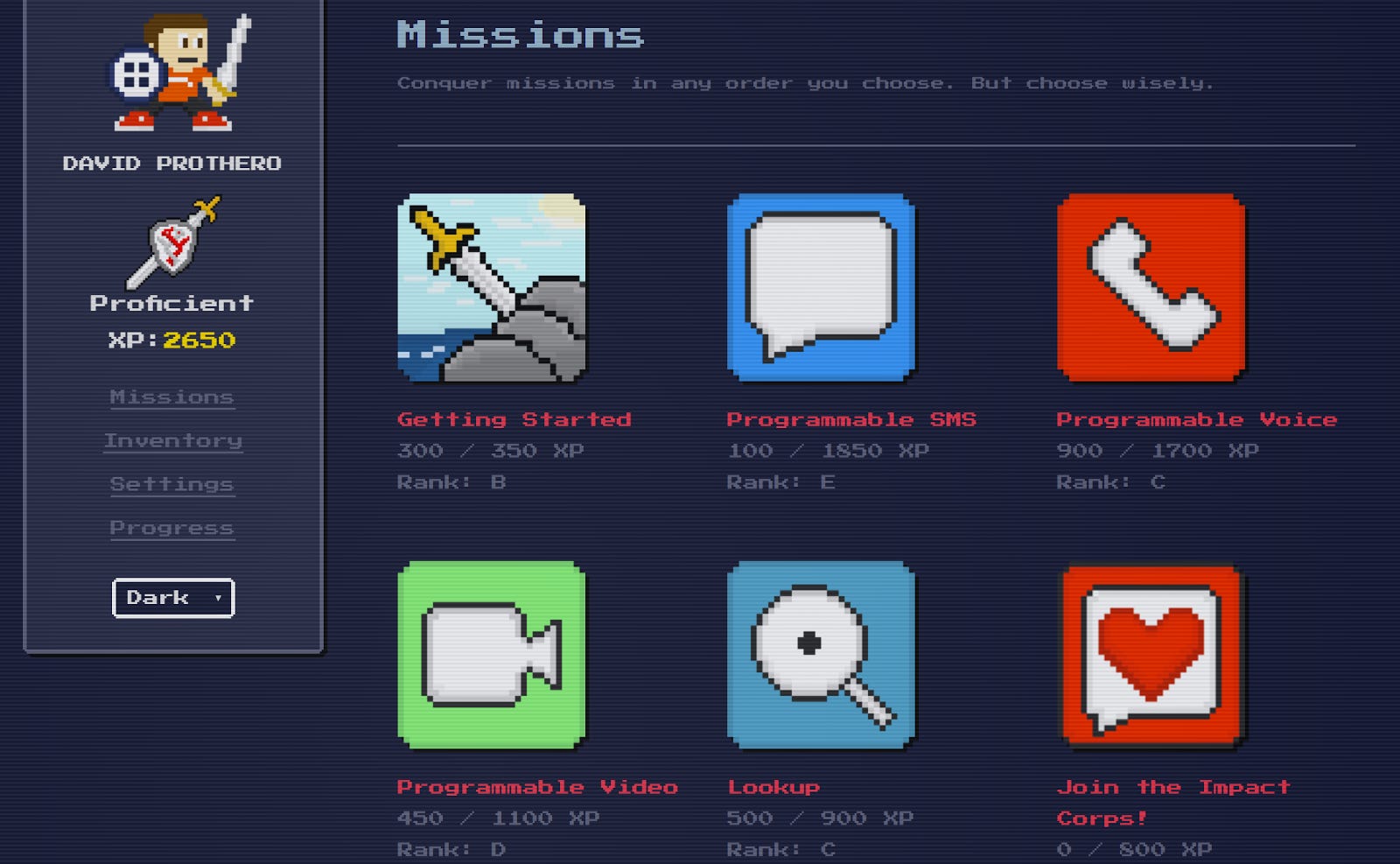
This leaves a lasting impression because people remember much more when they actively participate rather than just consume information. Additionally, cognitive psychology shows that information is easier to remember when it is structured as a story thanks to causality, sequence, and emotional context.
Very strong examples come from developer culture itself: easter eggs, playful release notes, and hidden features. From an ambient experience perspective, this is about surprise, delight, and emotional connection. Those unexpected moments tied with emotional reaction are remembered more strongly than neutral or predictable ones.
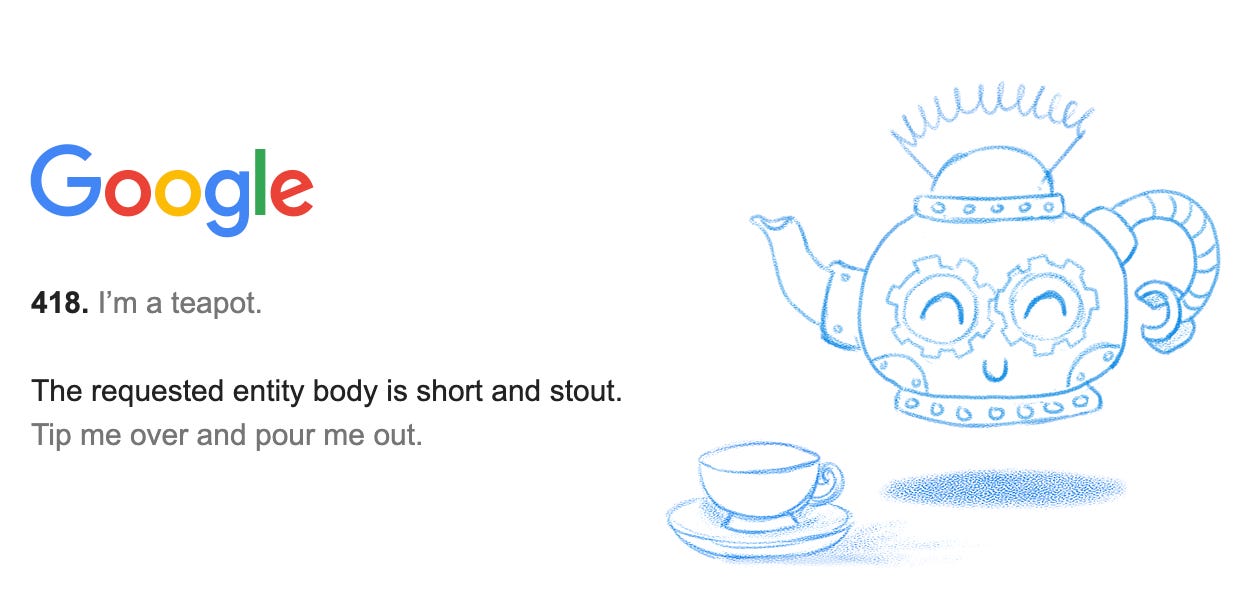
Think of the 418 status code, the April Fools Joke from 1998, or other Google’s humorous error messages or Slack’s famous release notes, which often include jokes, storytelling, and playful descriptions of bug fixes instead of corporate language. Just take a look at some the most recent ones:
Slack 26.02.20; 11 February 2026; Bug fixes
We’ve sanded down some rough patches in the app so as to avoid any digital splinters. Did you know that ‘digital splinters’ were a thing? They are now, but they aren’t anything you’ll need to worry about.Slack 26.01.10; 7 January 2026; Bug fixes
We tweaked some things too small to notice or too difficult to explain. We’ll return you to your regular, more interesting types of release next time (we hope).
This kind of communication does not directly promote the product, but it builds personality, emotional connection, and a sense that the software is made by humans with a sense of humor. Over time, these small touches become part of the product experience and culture around it.
Next, there’s the environment design, and multisensory engagement. It is no surprise that this approach can already be seen at conference booths, hackathons, and interactive workshops. Companies try to capture developer attention with arcade games, lotteries, or coding challenges. However, it has become increasingly difficult to make a lasting and memorable impression. Additionally, from my perspective, these loud and busy interactive installations do not always attract developers who are more introverted.
That’s why I truly enjoyed the immersive session I described at the beginning of this blog post. It was remarkably well crafted, leveraged multisensory learning theory, and it influenced every person in the room with positive mood shift in a subtle way. I think there’s still a room for exploring this approach of crafting developer events, which can be unique to each and every product or technology.
Finally, there’s something I heard about but I haven’t had a chance to participate in. Algoraves merge art and technology by turning code into live music, visuals, and interactive performances. Attendees become participants, immersed in rhythm, light, and sound. These experiences must leave a lasting impression, showing that technology can be playful, creative, and memorable.
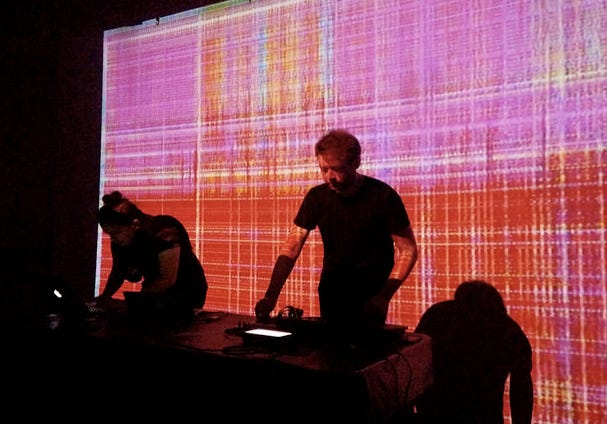
Tidal Cycles (or just Tidal for short) is software for making patterns with code, whether live coding music at algoraves or composing in the studio. It includes a simple and flexible notation for rhythmic sequences, and an extensive library of patterning functions for combining and transforming them.
In a nutshell, ambient experiences are so impactful because they are lived rather than observed. The goal of Ambient Developer Advocacy is not only to explain what a technology does, but to create memorable moments around it. Over time, developers may forget specific features or APIs, but they remember how a tool made them feel, the playful details, and the experiences they had while learning it.
Taking all of the above into account, Developer Relations is not only about communication, education, and promotion, but also about experience design, environment design, and memory design. It embeds knowledge, curiosity, and connection in the mind through emotion, memory, flow state, and engagement.